A cold chain is a sequence of temperature-controlled steps that has no weak link. Cargo that spends four weeks in a correctly set reefer and forty minutes on an unshaded loading dock has still failed, and for pharmaceuticals or vaccines that failure may be invisible until the product does not work. This article covers how temperature-controlled logistics operates in Pakistan, where the chain typically breaks, and what protects it.
What the chain is made of
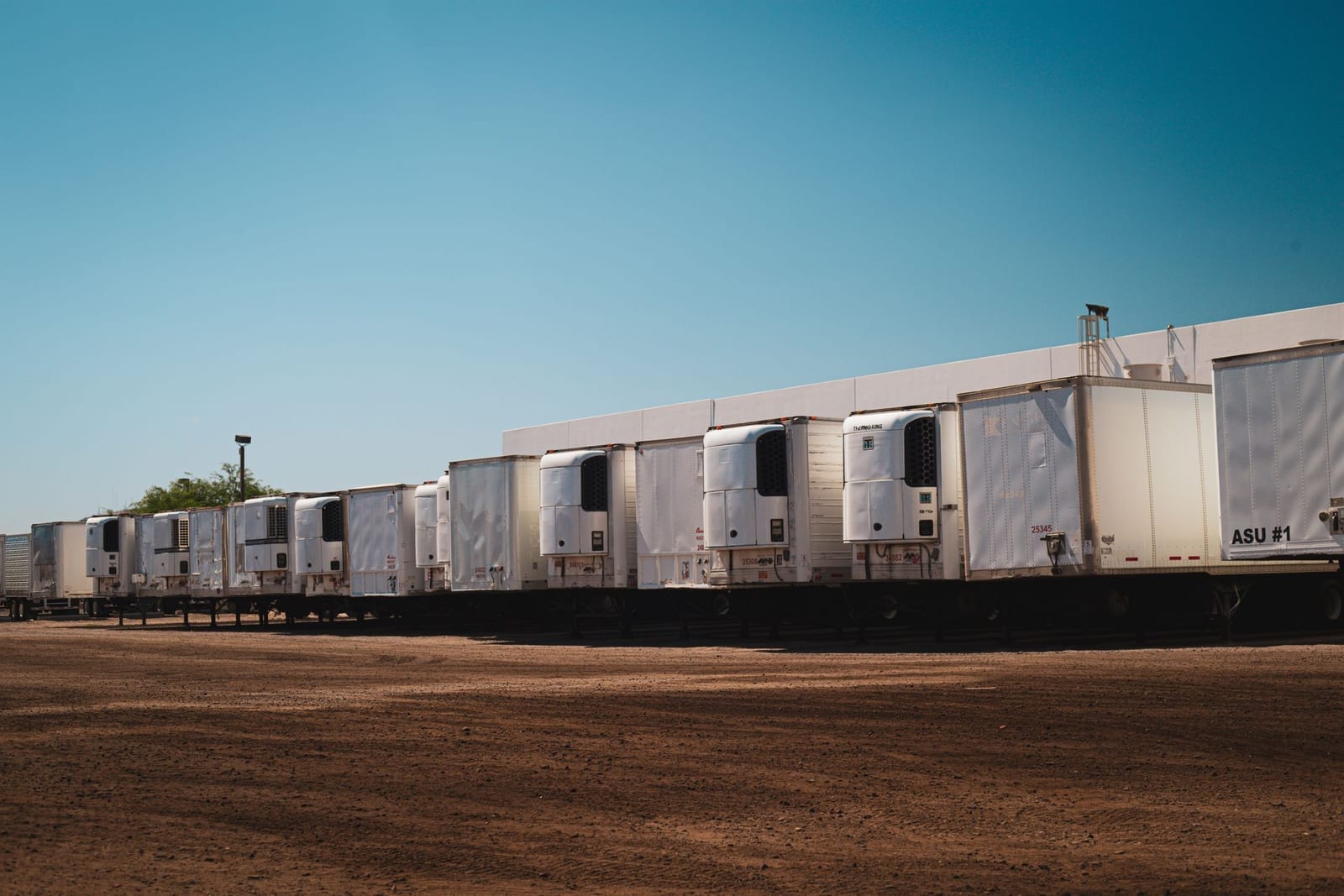
Every temperature-controlled movement is a series of custody transfers, and each transfer is a risk point. A typical import runs: origin cold storage, loading into a reefer container, port of loading, ocean voyage with the unit running on ship power, discharge at destination, plug-in on the terminal, clearance, unplugging for road transport, reefer truck, and finally the consignee's cold room.
The voyage is usually the safest part of that sequence, because it is long, monitored and uneventful. The dangerous moments are the short ones — the gaps between plug points, the wait for a delivery to be accepted, the pause on a dock while paperwork is found.
Temperature regimes
- Frozen — for products requiring deep cold, typically foodstuffs and certain biological materials
- Chilled — the range covering fresh produce, dairy and many food products
- Cool or controlled ambient — a moderate band used widely for pharmaceuticals and healthcare products
- Controlled room temperature — the widest band, but still a specification rather than an absence of one
The specification comes from the product, not from the logistics provider. What matters operationally is that everyone in the chain knows the required range, that equipment is set to it, and that excursions outside it are recorded rather than assumed not to have happened.
Where the chain breaks in practice
- The window between terminal discharge and plug-in, particularly when a vessel arrives outside working hours
- Clearance delays that leave a reefer waiting with limited or interrupted power
- The transfer from container to truck, where the cargo is briefly exposed
- Delivery to a consignee who cannot receive immediately, leaving the unit idling at the gate
- Equipment that was never verified before loading, and fails mid-journey
- Loading patterns that block airflow, so the unit is running correctly but the air is not reaching the cargo
The last one is worth dwelling on because it is invisible. A reefer unit conditions air; it does not condition the cargo directly. Pallets stacked flush against the walls or blocking the floor channels leave pockets of product outside the controlled airflow, and the data logger by the door will show a perfect journey.
Monitoring and evidence
Temperature monitoring serves two purposes that are often conflated. The first is control — knowing in time to intervene. The second is evidence — proving after the fact what conditions the cargo experienced.
For evidence, a data logger travelling with the consignment produces a record that can be read on arrival. For control, real-time monitoring is required, because a logger tells you what went wrong only once it is too late to prevent. Which you need depends on whether an excursion would be recoverable, and for high-value pharmaceutical cargo the answer is usually that it would not.
Pharmaceutical cold chain
Healthcare products carry the tightest requirements and the least tolerance. Beyond temperature, they attract regulatory attention: imported medicines and related products require authorisation from the drug regulatory authority, and release procedures apply on arrival. That means clearance time is part of the cold chain rather than separate from it, and a regulatory hold is also a temperature risk.
The practical implication is that pharmaceutical consignments must be prepared further ahead than other cargo. Approvals obtained before shipment, documents complete before arrival, plug-in arranged, and transport standing by — because every day of clearance is a day the product spends dependent on equipment rather than on a validated storage facility. This connects closely to pharmaceutical clearance.
Food and agricultural produce
Food cold chain differs in tolerance rather than principle. Excursions may reduce shelf life and quality rather than destroy the product outright, but the commercial effect — a rejected delivery, a markdown, a lost customer — is real.
For fresh produce, condition on arrival is largely determined before the container is sealed. Product loaded warm cannot be cooled effectively by a reefer unit in transit, because the unit is designed to hold temperature rather than remove field heat. Precooling before loading is the single highest-return step in produce exporting, and the one most often skipped.
Building a chain that holds
- Specify the required range explicitly on the booking, not verbally
- Verify equipment before loading rather than trusting the plug
- Plan the plug-in at destination as an operational step with an owner
- Prepare clearance so the consignment is not waiting on documents
- Load for airflow, not only for volume
- Carry monitoring appropriate to whether an excursion would be recoverable
- Ensure the consignee can receive on arrival
Validation and why it matters commercially
Validation means demonstrating in advance that a shipping arrangement holds the required conditions, rather than hoping it did and checking afterwards. For a passive solution — insulated boxes with phase-change material — that means establishing how long it maintains temperature under realistic ambient conditions, including the delays that actually happen rather than the schedule that was planned.
The distinction between passive and active shipping matters here. Passive solutions are self-contained and simple, with a fixed protection window; once that window closes the cargo is exposed regardless of what happens next. Active containers regulate temperature continuously with their own power, so a delay is survivable, but they cost more and need charging and monitoring.
The choice should follow the consequence of failure rather than the value of the goods. A shipment where an excursion means a markdown can reasonably travel passive with a good margin. A shipment where an excursion means the product cannot be used at all — and where the recipient is a hospital or a vaccination programme — is a different risk calculation, and the extra cost of active shipping is small against the value of the certainty.
ASC Freight coordinates temperature-controlled movements across air freight, sea freight and the inland leg, with clearance handled in-house so a regulatory hold does not become a cold chain problem.
- cold chain
- pharma logistics
- reefer
- temperature control