Warehousing is where importing stops being a transport problem and becomes an inventory problem. The container arrives, the goods are yours, and from that point what governs your working capital is how much stock you hold, how long it sits, and how reliably it moves out again. This article covers how warehousing and distribution actually work for Pakistani importers and distributors, and the decisions that matter most.
What warehousing is for
It is worth being precise, because the answer determines what kind of facility you need. Warehousing serves several distinct purposes, and a building optimised for one is often poor at another.
- Buffering — absorbing the mismatch between long import lead times and short customer lead times
- Consolidation and break-bulk — receiving in container quantities and issuing in customer quantities
- Value-added work — labelling, repacking, kitting, quality inspection before dispatch
- Positioning — holding stock close to demand so delivery is fast
- Deferral — under bonded arrangements, holding goods before duty is paid
Types of facility
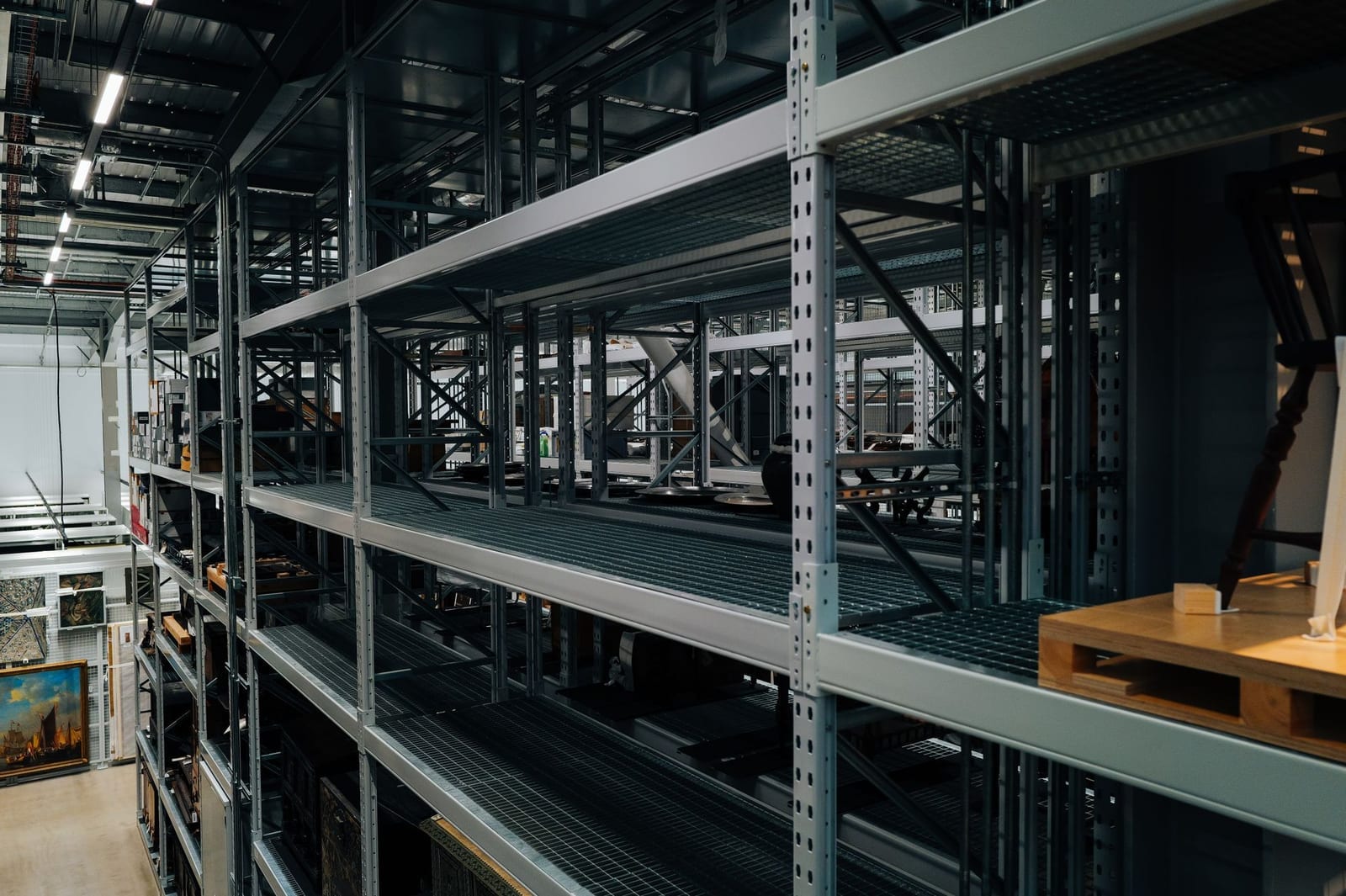
Public warehousing sells space and handling as a service, typically charged per pallet or per square metre plus transaction fees. Private warehousing is your own facility, with your own staff and fixed costs. Contract logistics sits between them: a dedicated operation run by a third party to your requirements.
Bonded warehousing is different in kind rather than degree. Goods are held under customs control with duty deferred until they are removed for home consumption, which converts a large upfront payment into a payment aligned with actual sales. For importers holding significant stock, the cash flow effect can be worth more than the storage costs.
Choosing between in-house and third party
The honest test is volume stability and specialisation. Steady, predictable volume with no unusual handling requirement tends to favour your own facility, because fixed costs are spread and control is complete. Volatile or seasonal volume favours a third party, because you pay for what you use and someone else carries the capacity risk.
Specialisation cuts the other way. Temperature control, hazardous goods segregation and regulated storage all require capability that is expensive to build and easy to buy, so even large importers frequently outsource those categories while running their own ambient space.
Location: port or market?
Warehousing near the port shortens the inland leg on inbound cargo and simplifies the handover from clearance. Warehousing near the market shortens delivery to customers and improves service. Both cannot be optimised at once, and the right answer depends on where your cost actually concentrates.
Importers with national distribution frequently end up with a hybrid: a primary facility near the port handling receipt and bulk storage, and smaller forward positions closer to major demand centres. That structure costs more in fixed terms and usually wins on service and total transport cost — but only once volume justifies it.
Stock rotation and dated goods
For anything with an expiry date, rotation discipline is not an operational nicety but the difference between margin and write-off. First-in-first-out issues the oldest stock first. First-expired-first-out issues the stock closest to expiry first, which is not the same thing when consignments arrive with different remaining shelf life.
For food, pharmaceuticals and other dated goods, first-expired-first-out is the correct discipline, and it requires knowing the expiry of every batch in the building rather than merely the receipt date. This is one of the most common failures in Pakistani distribution and one of the easiest to fix with a system that records batch and expiry at receipt.
Stock accuracy
Inventory records diverge from reality continuously, through miscounts, mispicks, damage and unrecorded movement. The question is not whether they diverge but how quickly you notice. Periodic full counts find the gap late; cycle counting, where a small proportion of locations is counted continuously, finds it early enough to fix the cause.
Accuracy matters commercially because it determines whether you can promise stock you actually have. An importer whose system says one thing and whose shelves say another will either disappoint customers or hold excess buffer to compensate, and both cost money.
Distribution
Outbound is where warehousing meets the customer, and where service is either delivered or lost. The main variables are order cut-off times, pick accuracy, dispatch frequency and the delivery network beyond the gate. For distributors serving retail, delivery windows and paperwork completeness matter as much as speed, because a delivery that cannot be received is not a delivery.
Returns deserve planning rather than improvisation. Whether from retail or from direct-to-consumer channels, returned stock needs a defined route back into sellable inventory or out of it, and warehouses that treat returns as an afterthought accumulate an expensive corner of unresolved goods.
Practical starting points
- Record batch and expiry at receipt for anything dated, and issue first-expired-first-out
- Introduce cycle counting rather than relying on annual stocktakes
- Review whether bonded storage would improve cash flow on your holding profile
- Locate against where your cost concentrates, not by default near the port
- Plan returns handling explicitly before volume makes it urgent
What to expect from a third-party provider
Where warehousing is outsourced, the contract deserves more attention than it usually gets, because ambiguity in it surfaces as disputes about who pays for what. Pricing models vary: storage may be charged per pallet position, per square metre or per unit, and handling may be bundled or charged per movement. Two quotations built on different models are extremely difficult to compare without modelling your actual volume through both.
Beyond price, agree the operational specifics in advance. What are the receiving hours and the order cut-off times? What stock accuracy is committed to, and what happens when a count is wrong? Who is liable for damage in storage, and to what limit? How is inventory reported, and can you see it yourself rather than requesting it?
For dated goods, add batch and expiry visibility explicitly to that list. A provider whose system records only quantities cannot operate first-expired-first-out for you, however willing they are, and you will discover this when short-dated stock surfaces at the back of a location.
ASC Freight coordinates logistics and warehousing alongside clearance and road freight, so inbound containers, storage and onward distribution are planned as one movement rather than three.
- warehousing
- distribution
- inventory
- logistics